



Eco-Friendly Business Cards: Sustainable Options Compared
Recycled paper, seed paper, or a digital NFC card? A clear, honest comparison of eco friendly business cards—paper waste, lifecycle, and which choice actually reduces your footprint.
By VIPKART · Published June 20, 2026 · 8 min read
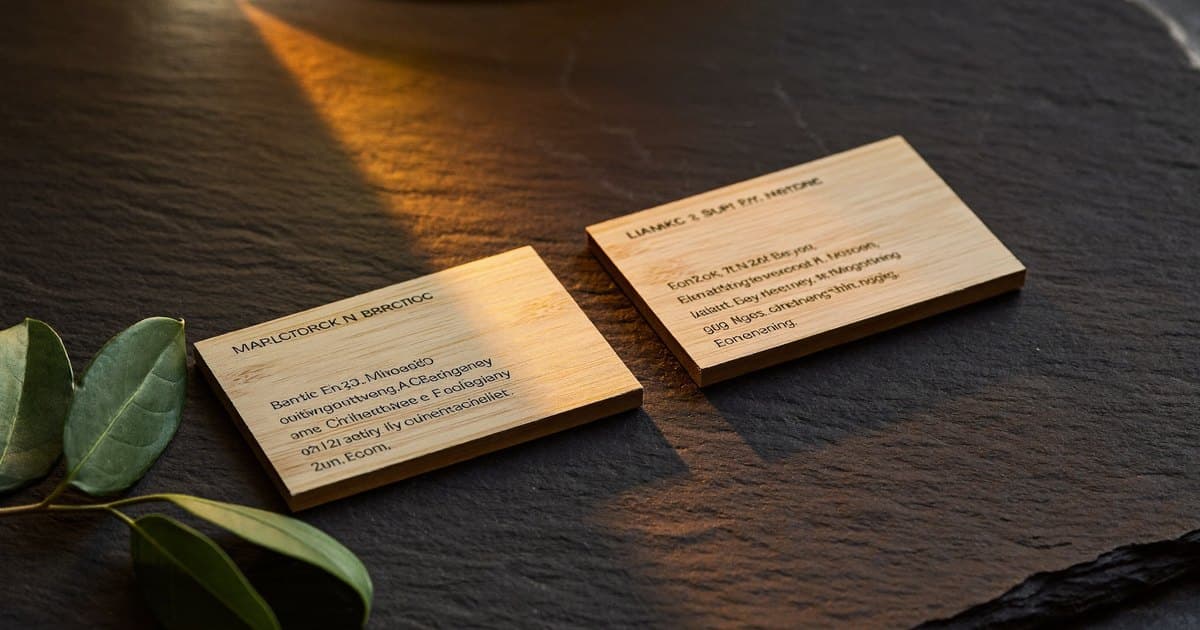
Most business cards are printed, handed over once, and thrown away within a week. That single fact is why "eco-friendly business card" has become such a loaded phrase—because the greenest card is rarely the one with a recycled-paper logo on the back. It is the one that doesn't end up in a bin.
If you've started looking for a more sustainable way to share your details, you've probably found a confusing field: recycled stock, seed paper that "grows into flowers," bamboo, cotton, and digital cards that claim to use no paper at all. Some of these genuinely lower your footprint. Some mostly lower your guilt. This guide compares the real options honestly—including where each one quietly falls short—so you can choose based on lifecycle impact rather than marketing.
Why paper business cards are an environmental problem
Before comparing the alternatives, it's worth being clear about the scale of what we're replacing. The figures that circulate online are often unsourced and inflated, so treat any precise "billions of cards per year" claim with caution. What is well-established, and uncontroversial, is the shape of the problem.
A paper business card has a short, linear life. It is printed in bulk, often on coated or laminated stock, distributed at events, and the overwhelming majority are discarded—frequently the same day. Industry surveys have long suggested that the large share of cards handed out are thrown away within a week, and that a meaningful fraction of the contact details on them are never entered into a phone at all. The card did its job for a few seconds and then became waste.
The footprint isn't only the paper. It includes:
- The fibre and water used to make the stock, even when partly recycled.
- The inks and coatings—many cards are finished with plastic lamination or spot-UV gloss, which makes them feel premium but renders them non-recyclable and non-compostable.
- The reprints. People change jobs, titles, phone numbers, and brands. Every change orphans a box of cards. The "500 cards for €15" deal is cheap precisely because most of those 500 will never reach a person who keeps them.
That last point matters most. A card you reprint twice a year has triple the footprint of its sticker suggests. So the honest question isn't "which card is made from greener material?" It's "which approach produces the least waste across its whole life?" That reframing changes the answer.
The sustainable options, compared
There are four genuine contenders, and they sit on a spectrum from "a better disposable" to "designed not to be disposable at all."
Recycled paper cards
Recycled stock is the most familiar eco option, and a real improvement over virgin coated card. Post-consumer recycled (PCR) paper reuses fibre that already exists, reducing demand for fresh pulp, and uncoated recycled stock can usually be recycled again or composted.
The honest caveats:
- "Recycled" is a spectrum. A card that is 10% recycled content is marketed identically to one that is 100% PCR. Look for the actual percentage and a credible certification (FSC Recycled, for example), not just the word.
- Coatings cancel the benefit. A recycled card with a plastic laminate or gloss UV finish often can't be recycled or composted—the very thing that made it "eco" is sealed behind a layer that isn't. If you go this route, choose uncoated.
- It's still disposable. A recycled card that gets thrown away in three days is a slightly better version of the same linear waste problem. You've reduced the impact per card, not the number of cards that become waste.
Recycled paper is the right answer when you specifically need a physical paper card and want the lowest-impact version of one. It is not, by itself, a solution to the disposability problem.
Seed paper cards
Seed paper—card embedded with wildflower or herb seeds that you plant after use—is the most emotionally appealing option, and the most commonly oversold. The promise is lovely: your card doesn't become waste, it becomes a plant.
In practice, the claim deserves scrutiny:
- Someone has to actually plant it. A seed card that's tossed in a drawer or a general bin behaves exactly like any other card—it just biodegrades a little better. The environmental benefit is entirely conditional on a behaviour most recipients won't perform.
- It can only carry limited information, is usually thick and fibrous, and doesn't hold fine print or detailed branding well—so it's often a novelty handed out alongside a "real" card, which means more material, not less.
- The ecological math is modest. Even when planted, a few wildflower seeds are a small environmental contribution, not a meaningful carbon offset. It's a nice gesture, not a footprint solution.
Seed paper is best understood as a memorable, low-guilt novelty rather than a sustainability strategy. If the warm feeling helps your brand and the recipient plants it, lovely—but don't mistake it for the option that meaningfully cuts waste.
Digital and NFC business cards
A digital business card moves your details off paper entirely. Instead of printing your contact information, you host it on a web profile and share it by tapping an NFC card, scanning a QR code, or sending a link. The recipient saves your details to their phone directly—no card to keep, lose, or bin.
This is the only option that attacks the disposability problem at its root, because there is nothing disposable to produce per contact. The footprint shifts from "one printed object per person you meet" to "one reusable device, used thousands of times." For a deeper breakdown of the trade-offs, our guide on digital vs paper business cards walks through cost, convenience, and impact side by side.
The honest accounting here matters too, because "digital = zero footprint" is its own form of greenwashing:
- Digital isn't weightless. Hosting a profile uses servers, and servers use electricity. The per-view energy cost of loading a lightweight profile page is genuinely tiny—but it isn't nothing, and anyone claiming a literal zero footprint is overstating it.
- The device still has a footprint. If sharing relies on an NFC card or keyring, that physical object was manufactured and shipped. The benefit comes from amortising it: one card replaces hundreds or thousands of printed ones over years of use.
- Update without reprinting. This is the quiet win. Change jobs, numbers, or branding and you edit the profile—no reprint, no orphaned box. Across a career, the avoided reprints are where most of the real saving lives.
For most professionals who network regularly, the lifecycle math favours digital decisively: the impact of a single durable card, used for years, is far below that of repeatedly printing, reprinting, and discarding paper. Just be wary of products that lock that profile behind a perpetual subscription—the sustainability case shouldn't come with a recurring fee to keep your own details online.
Bamboo and wood NFC cards: reusable by design
There's a middle path that many people miss, and it's where the sustainability story gets most interesting: a physical card you can still hand over and that feels premium, made from a renewable material, but built to be kept and reused rather than thrown away.
Bamboo and wood NFC cards combine the two ideas. The card itself is made from a fast-renewing material—bamboo in particular is a grass that regrows in years, not decades—while the NFC chip inside means the card shares a digital profile. So a single bamboo card isn't one contact's worth of waste; it's a durable object you tap against thousands of phones over its lifetime, each time sharing details you can update without touching the card.
Why this works as a genuine eco choice:
- Renewable material, not plastic. A wood or bamboo card avoids the PVC and laminate of conventional cards. It's a natural surface that ages well rather than a plastic rectangle destined for landfill.
- One object, not hundreds. Because the card is reusable and the data is digital, you stop the print-discard-reprint cycle entirely. The recipient keeps nothing—they save your details to their phone—so your card comes home with you and gets used again.
- It still feels like a real card. The reason people resist going fully digital is the handover ritual: the physical moment of giving something. A bamboo card preserves that ritual while removing the waste behind it.
This is the option that resolves the tension running through this whole comparison. You don't have to choose between "physical but wasteful" and "sustainable but intangible." A reusable wood or bamboo NFC card is physical, premium, renewable, and—because nothing is consumed per contact—structurally low-waste. You can see how VIPKART approaches the materials and lifecycle on our sustainability page.
So which one is actually the greenest?
Ranking these honestly means ranking them by lifecycle, not by how green the material sounds.
- A reusable NFC card (especially bamboo or wood) tends to win for anyone who networks more than occasionally, because it eliminates per-contact waste and reprints while keeping a physical handover. The renewable material is a bonus on top of the structural saving.
- A purely digital card (share by link or QR, no physical object) is arguably the leanest of all in raw material terms, and ideal for fully remote or high-volume sharing—though many people miss the tangibility.
- Uncoated recycled paper is the best choice if you genuinely need a disposable paper card—it's a real improvement, but it doesn't solve disposability.
- Seed paper is a charming novelty whose benefit depends entirely on the recipient planting it. Treat it as branding, not as a footprint strategy.
The deciding factor for almost everyone is volume and change. If you hand out a few cards a year and never change roles, the gap between options is small. If you network regularly, switch jobs, rebrand, or run a team, the avoided reprints make the reusable digital approach the clear environmental winner—and usually the more practical one too.
Frequently asked questions
Are digital business cards actually more eco-friendly than paper?
For anyone who networks regularly, yes—because the comparison isn't one card versus one card, it's one durable card versus hundreds of printed-and-discarded ones over time. A digital or NFC card avoids per-contact paper entirely and removes reprints when your details change. The honest caveat is that "digital" still uses servers and, often, a physical sharing device—so the saving comes from reuse over years, not from a literal zero footprint.
Is seed paper really sustainable?
Only if it's planted. Seed paper biodegrades better than coated card and is a nice gesture, but its headline benefit—becoming a plant instead of waste—depends on the recipient actually planting it, which most won't. It also tends to be a novelty handed out alongside a normal card, which can mean more material rather than less. It's good branding; it's a weak footprint strategy.
What makes bamboo NFC cards a sustainable choice?
Two things working together. First, bamboo is a fast-renewing material that avoids the plastic and laminate of conventional cards. Second, because the card carries an NFC chip that shares a digital profile, it's reused thousands of times rather than consumed once—the recipient saves your details to their phone and keeps nothing. So you get a renewable material and the elimination of per-contact and reprint waste in a single object.
Can recycled paper cards be recycled or composted again?
Only if they're uncoated. Many recycled cards are still finished with plastic lamination or gloss UV, which seals the paper behind a layer that can't be recycled or composted—cancelling out the eco benefit. If you want a recycled card that stays in the loop, choose uncoated stock and check for a credible recycled certification rather than just the word "recycled."
Isn't manufacturing an NFC card also bad for the environment?
It has a footprint, yes—the card and chip were made and shipped. The point is amortisation. One NFC card used for years across thousands of taps replaces the repeated printing and discarding of paper cards over that same period. Spread across its full life, the per-contact impact of a reusable card is far lower than handing out fresh paper every time. The worst outcome environmentally is the one almost everyone defaults to: printing new boxes of cards again and again.
Do I have to give up a physical card to be sustainable?
No—and that's the part most people get wrong. The choice isn't "physical and wasteful" versus "digital and intangible." A reusable wood or bamboo NFC card keeps the physical handover people value while sharing a digital profile, so there's no paper consumed per contact and no reprinting when your details change. You keep the ritual and lose the waste.
Choose the card that doesn't become waste
The greenest business card isn't the one with the most eco-friendly label—it's the one you stop throwing away. Recycled paper makes disposability a little less wasteful; seed paper makes it a little more charming. Only a reusable digital approach removes the disposability itself.
If you want a card that feels premium in the hand, uses a renewable material, and shares details you can update for years without ever reprinting, take a look at how VIPKART builds for exactly that on our sustainability page—and explore the digital business card range to find the one that fits how you actually network.
Ready to make a card people keep?
Tap to share, save in seconds, and update your details for life.
Explore VIPKART