



Google Review Cards for Salons, Spas and Barbers
How salons, spas and barbershops use a Google review card to collect five-star reviews at the chair and checkout: timing the ask, staff scripts, display ideas, and the results to expect.
By VIPKART · Published June 20, 2026 · 10 min read
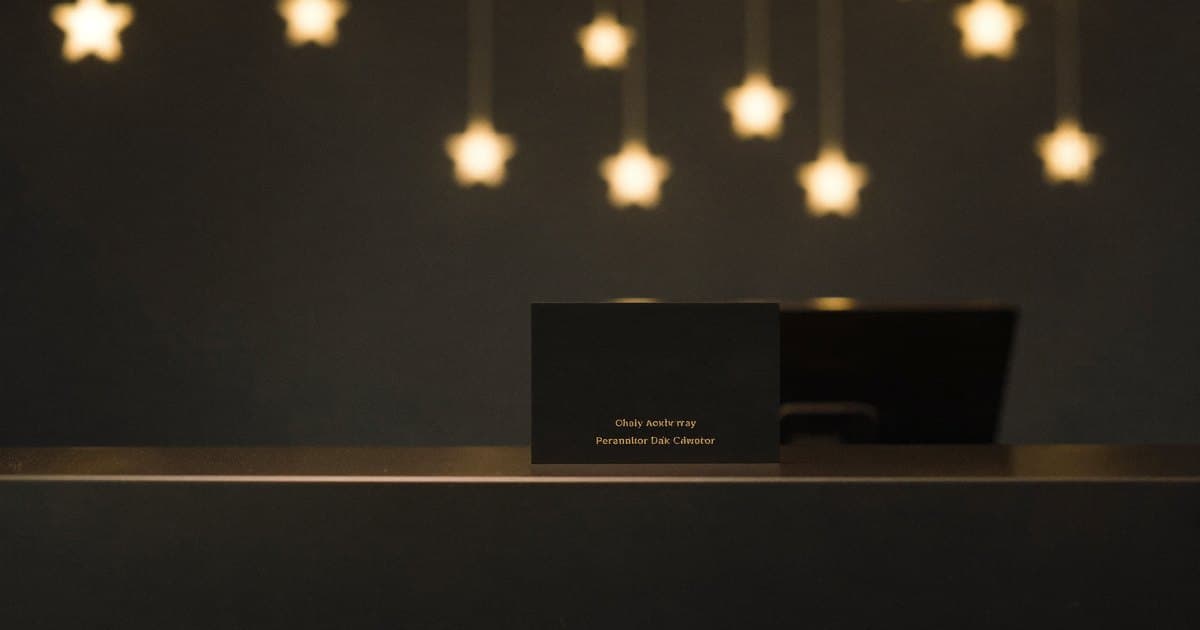
A great salon visit is a sequence of small, deliberate good moments. The greeting at the door. The consultation where someone actually listens. The scalp massage. The reveal in the mirror. By the time a client is paying, they are usually at the emotional high point of the entire experience—relaxed, looking better than they did an hour ago, and genuinely grateful.
That is the moment most reputations are won or lost. Not because anything goes wrong, but because nobody asks. The client floats out the door, fully intending to "leave a review later," and later never comes. The feeling fades on the drive home, and a five-star review that was sitting right there, ready to be written, quietly evaporates.
A Google review card is the tool that catches that moment before it slips away. This guide is specifically for the beauty world—hair salons, nail bars, spas, barbershops, lash and brow studios—where the rhythm of the appointment, the physical layout of the space, and the relationship between stylist and client are unlike any other kind of business.
Why salons live and die by Google reviews
Walk into any neighbourhood and watch how people choose where to get their hair cut. They are not flipping through a phone book. They are typing "barber near me" or "balayage [city]" into Google Maps, then scanning two numbers: the star rating and the review count.
For a salon, those numbers do specific work that they do not do for, say, a plumber:
- Beauty is high-trust and high-vanity. A client is handing a stranger a pair of scissors and trusting them with how they will look for the next six weeks. Reviews are how they reassure themselves before they ever sit down.
- The work is visual and personal. People read salon reviews looking for someone "like them"—their hair type, their colour goal, their age, their anxiety about a big change. A deep bench of recent reviews lets prospects find their match.
- Recency signals safety. A salon with its last review from fourteen months ago reads as "are they even still open?" A steady drip of fresh reviews says "this place is busy and people keep coming back."
The volume problem is real. A barber might do twelve to twenty cuts a day; a busy colourist sees fewer clients but each appointment runs hours. Either way, you are sitting on dozens of delighted people every week and converting almost none of them into public proof. Closing even a fraction of that gap changes your ranking on Maps, and ranking on Maps changes who walks through the door.
If you want the broader playbook on asking without being pushy, how to get more Google reviews covers the fundamentals. This article is about applying them to a chair, a basin, and a treatment room.
What a review card actually is (and why NFC beats a printed link)
A review card is a small card—often the size of a business card or a tabletop sign—that, when tapped against a phone or scanned, opens your Google review page directly. No app. No typing your business name into search. No hunting for the "write a review" button.
There are two technologies inside, and they work together:
- NFC: the client taps their phone to the card and your Google review screen opens instantly. Most modern phones read NFC with no app at all.
- QR: a printed code that older phones, or anyone who prefers not to tap, can scan with the camera.
The reason this matters for salons specifically is friction. A printed card that just says "Find us on Google!" asks the client to do six things: unlock their phone, open Maps, type your name, pick the right listing, scroll to reviews, tap to write. Every one of those steps is a place to give up—and a client with wet nails or a freshly styled blowout is not going to fight their phone in your reception area.
A tap that lands them one button away from five stars removes all of it. If you want the full comparison of why a tappable card outperforms a printed code on a stand, read Google review card vs QR stand and the deeper what is a Google review NFC card.
Timing the ask: the salon-specific golden window
In a restaurant, the moment is when the plates are cleared and people are happy but not yet rushing for the door. In a salon, the timing is different—and getting it right is most of the battle.
The peak is the mirror reveal, not the payment
The single best moment is when the stylist spins the chair, the client sees the finished result, and their face lights up. That is when gratitude is highest and most specific. They are not feeling generic satisfaction; they are feeling this exact cut looks amazing. A review asked for in that moment carries that detail into the text.
The practical problem is that hands are full and the client is still caped. So the structure that works best is a two-beat ask:
- Plant the seed at the reveal. The stylist, while the client is still admiring the result, says the kind word that primes the request.
- Hand off at checkout. At the desk, the card is presented while the client's hands are free and they are waiting for the card machine anyway.
Map the ask to the service length
- Quick services (barber cut, blow-dry, brow shape): ask at the chair right after the reveal. The whole visit is short and high-energy; do not wait.
- Long services (full colour, balayage, keratin, spa packages): the client has invested hours and a lot of money. The emotional payoff is enormous. Ask at the reveal, reinforce at checkout. These clients write the longest, best reviews.
- Spa and treatment rooms: the client leaves relaxed and a little sleepy. Do not ambush them mid-glow. The reception handoff at checkout, with a warm "we'd love it if you shared how you feel," is the right register.
Never ask while you are still working
Asking a client to review you while you are halfway through their colour puts them in an awkward spot—they cannot honestly assess the result yet, and they feel pressured. Wait for the work to be done and visibly good.
Staff scripts that feel human, not salesy
The difference between a script that converts and one that makes everyone cringe is specificity and timing. Stylists are not salespeople, and a robotic "please leave us a five-star review" makes them uncomfortable and the client suspicious. Give your team natural language they can make their own.
At the mirror, the seed (stylist):
"I'm really happy with how this turned out—the colour caught the light exactly how we wanted. If you love it too, I'd be so grateful if you'd say a word for me on Google. The front desk has a little card that makes it one tap."
At the desk, the handoff (reception):
"Did Maria take good care of you today? She did? She'll be thrilled—if you've got ten seconds, just tap your phone here and it'll open straight to the review. It really helps her."
Notice what these do:
- They name the stylist. Reviews that mention a specific team member by name are gold—they help that stylist build a personal following, and they read as authentic. Naming the person also gives the client something concrete to write about.
- They frame it as a personal favour, not a corporate metric. "It helps her" is true and lands far better than "it helps our business."
- They make the mechanism feel effortless. "One tap," "ten seconds," "opens straight to it." You are removing the imagined hassle before the client can imagine it.
A few rules to brief the team on:
- Ask once, gracefully. If a client demurs, smile and drop it. Pestering costs you the next visit.
- Never offer anything in return. Discounts or free add-ons in exchange for reviews violate Google's policies and can get your reviews removed or your listing penalised. The card is about removing friction, never buying praise.
- Don't pre-screen. Asking only happy clients is also against the rules, and frankly you do not need to—a salon doing good work has a flattering average without gaming it.
Display and placement ideas for the salon floor
Where the card lives shapes how often it gets used. You want it in the natural path of the visit, present at the high-emotion moments, and on-brand enough that it does not look like clutter.
The checkout counter
The non-negotiable. A small standing card or block sign next to the card machine. The client is already standing there, phone or card in hand, waiting. A tasteful sign—"Loved your visit? Tap to share" with the tap zone marked—turns dead waiting time into a review.
At each station
A slim card tucked into the mirror frame or sitting on the styling station shelf lets the stylist run the ask themselves at the reveal, without walking the client anywhere. For barbershops especially, where the relationship is stylist-to-client and chatty, a card per chair lets each barber own their own review flow.
The wash basin and treatment room
For spas, place a discreet card where the client gathers themselves after a treatment. The mood is calm; the card should match it—understated, premium, no neon.
The waiting area
A coffee-table card or a framed QR for clients waiting on their colour to develop. Forty-five minutes under foil is dead time; a "while you wait, would you share your last visit?" prompt fills it.
A note on aesthetics: salons are design-conscious spaces, and a cheap plastic gadget at the desk undercuts the premium feeling you have spent money building. A matte, well-made card in a material that matches your interior reads as part of the experience, not an afterthought. Our review cards come in finishes meant to sit on a beautiful counter without looking out of place.
What results to actually expect
Let us be concrete, because vague promises help no one.
A salon that currently asks for reviews informally—maybe a sign nobody reads, maybe the occasional verbal mention—typically converts a tiny single-digit percentage of clients into reviewers. Most never ask at all and convert close to zero.
With a review card used consistently at the reveal-and-checkout rhythm, salons commonly see something like one in four to one in three asked clients leave a review on the spot, because you have collapsed the entire process into a single tap at the exact moment they are most motivated. The number that matters is not the percentage, though—it is the trajectory:
- A barbershop doing 80 cuts a week that converts even 15% of clients adds roughly 12 fresh reviews a week. That is more reviews in a month than many salons collect in a year.
- That velocity moves your Maps ranking, which increases impressions, which fills more chairs, which generates more reviews. The flywheel compounds.
The realistic timeline: you will see a noticeable jump in review volume in the first two weeks if the team actually uses the card. The Maps ranking and "people are finding us through Google" effect builds over one to three months as recency and volume accumulate. Reviews that name individual stylists also start steering new clients to specific team members, which helps with retention and rebooking.
The thing that determines all of it is consistency. A card in a drawer does nothing. A card the team reaches for at every reveal changes your business.
Getting your team to actually use it
The card is the easy part. The behaviour is the work. A few things that make adoption stick:
- Make it one person's job per shift to keep the cards stocked and visible at the counter and stations.
- Celebrate named reviews in your team chat. When a stylist gets a glowing review with their name in it, share it. Recognition drives the behaviour better than any mandate.
- Tie it to the reveal, not the payment, in training. Staff remember "ask when they love the mirror" far better than "ask at some point."
- Lead by example. When the owner or senior stylist asks naturally and confidently, the rest of the team copies the tone.
If you run more than one location or want every stylist to have their own card, digital business cards for teams covers how to manage cards across a roster from one place.
Frequently asked questions
Do clients need an app to use a review card?
No. NFC opens your Google review page directly in the phone's browser, and the QR code is read by the standard camera app. There is nothing for the client to download. See do NFC business cards need an app for the full explanation.
Is it against Google's rules to ask clients for reviews this way?
Asking is allowed and encouraged. What is not allowed is offering incentives in exchange for reviews, or selectively asking only happy clients (review gating). A review card simply makes leaving an honest review easier for everyone you ask—that is fully within the rules.
What if a client leaves a bad review?
A card does not create negative reviews; it surfaces the experience you are already delivering. Salons doing good work see their average rise, because the silent majority of happy clients finally get a frictionless way to speak. If you do get critical feedback, responding graciously and publicly often impresses future readers more than a wall of flawless five-stars.
Should each stylist have their own card or should we share one?
Both models work. A shared counter card captures everyone at checkout; per-station cards let each stylist run the ask at the reveal and earn reviews that name them personally. Many salons do both—a counter card plus a card at each chair.
How is a review card different from a QR code on a stand?
A printed QR stand only works for people willing to open their camera and scan. An NFC card adds the tap interaction, which is faster and more natural at a busy counter, and most cards include the QR too, so you get both audiences. The detailed comparison is in Google review card vs QR stand.
Will this actually help us rank higher on Google Maps?
Review volume and recency are well-known factors in local ranking. By steadily adding fresh, genuine reviews—especially ones with detail and stylist names—you strengthen exactly the signals Maps rewards. It is not instant, but it compounds over a few months.
The clients who would happily sing your praises are sitting in your chairs right now. The only thing standing between them and a five-star review is the few minutes of friction between leaving the salon and remembering to find your page. A review card removes that friction at the precise moment they feel most grateful.
If you are ready to turn the mirror reveal into a steady stream of reviews, take a look at our review cards—built to sit beautifully on a salon counter and get your team's best work the public credit it deserves.
Ready to make a card people keep?
Tap to share, save in seconds, and update your details for life.
Explore VIPKART