



The Environmental Impact of Paper Business Cards
A data-driven look at the paper business cards environmental impact—fibre, ink, water, transport, and the throwaway cycle—plus how reusable NFC cards cut the waste, with honest figures and no greenwashing.
By VIPKART · Published June 20, 2026 · 8 min read
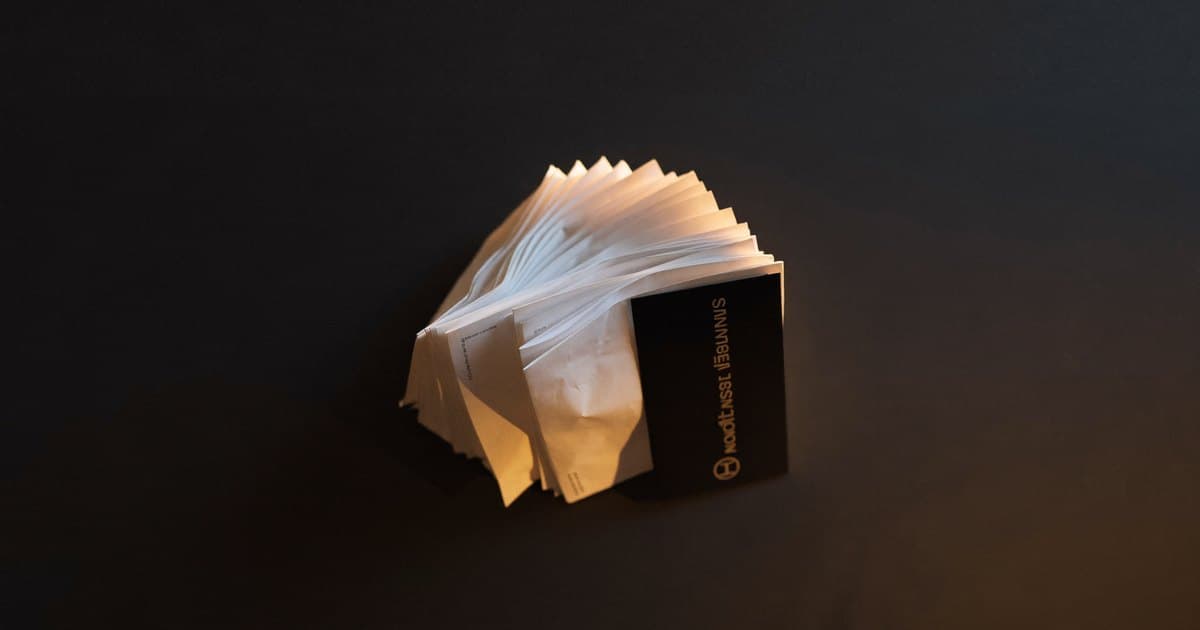
A paper business card weighs about a gram. On its own, that feels like nothing—a rounding error in anyone's carbon ledger. The problem isn't the single card. It's that the card is designed to be produced in hundreds, handed over in seconds, and discarded in days, and that this happens billions of times a year across the world. Small multiplied by enormous stops being small.
This article looks honestly at the paper business cards environmental impact: where the footprint actually comes from, how many cards are thrown away, why the reprint cycle quietly doubles or triples the damage, and what changes when you replace a disposable card with a reusable one. I've tried to keep the figures defensible. Where a number is an estimate or an order-of-magnitude, I say so. The goal isn't to scare you into feeling guilty about a gram of paper—it's to give you an accurate picture so you can make a sensible decision.
What actually makes up a card's footprint
When people picture the environmental cost of a business card, they usually picture the paper. Paper is the visible part, but it's only one input. A card's true footprint is the sum of several stages, and some of the heaviest costs are invisible on the finished product.
Fibre and forestry
Most business card stock is virgin or part-recycled wood pulp, often a heavier weight (300–400 gsm) than ordinary paper because cards need to feel substantial. Heavier stock means more fibre per card. Even when sourced from managed forests, pulp production carries a land-use and processing cost, and the move to coated premium finishes tends to favour brighter, more processed stock rather than recycled.
Water
Papermaking is water-intensive. Producing pulp and forming sheets consumes water for processing, washing, and cooling, and printing adds more through plate preparation and press operations. Published lifecycle figures for paper products vary widely, but the consistent finding across studies is the same: the water embedded in a sheet of paper dwarfs its physical weight. For a thick, coated card, the embedded water is meaningfully higher than for plain office paper.
Inks, coatings, and lamination
This is the stage that quietly ruins recyclability. Premium cards are often finished with plastic lamination, soft-touch coatings, or spot-UV gloss to feel expensive. Those finishes are exactly what stop a card from being recycled or composted. A laminated card is, functionally, a thin slab of mixed paper-and-plastic that most municipal recycling streams reject. Conventional inks add solvents and pigments; the more colour-heavy and glossy the design, the more there is to dispose of.
Printing energy and transport
Cards are printed on presses that draw power, then packed, and shipped—often internationally, because cheap bulk printing is frequently offshored. A "500 cards for €15" order may travel a long way before it reaches your desk. Each leg of that journey adds transport emissions to a product that, individually, will be used for a few seconds.
The honest summary: the visible paper is the smallest part of the story. Water, coatings, energy, and freight together make a card's footprint several times what its featherweight suggests.
How many cards actually get thrown away
Here is where the numbers get uncomfortable, and where I want to be careful, because this is the area most riddled with unsourced viral statistics.
You will see claims online that "27 million business cards are printed every day" and that "88% are thrown away within a week." These specific figures circulate endlessly but trace back to no verifiable original study. Treat any too-precise number with suspicion—including those.
What is well-supported, and uncontroversial among people who work in print and events, is the shape of the problem rather than the exact decimal:
- The overwhelming majority of cards handed out at events and meetings are discarded, and a large share are binned within days.
- A meaningful fraction of cards are never even acted on—the contact details are never entered into a phone, never added to a CRM, never used. The card was a social ritual, not a tool.
- Cards are printed in boxes, not on demand. You order 250 or 500 because the per-unit price collapses at volume. So the relevant unit of waste isn't the card you gave away—it's the box you bought, most of which will never reach a human who keeps it.
That last point is the heart of the matter. If you hand out 80 cards from a box of 500 before your phone number, title, or company changes, the other 420 are pure embedded waste: fibre, water, ink, energy, and freight spent on objects that went straight from box to bin. The footprint per useful card is far higher than the footprint per printed card, because so few printed cards are ever useful.
The reprint cycle: the multiplier nobody costs in
A single print run is a one-off cost. The real environmental story of paper cards is that they're rarely a one-off.
Consider an ordinary professional life. You change jobs every few years. Within a role, your title shifts, your direct line changes, your company rebrands, your office relocates, your logo gets refreshed by a new marketing team. Each of those events orphans your current stock. The box you bought becomes obsolete not because it ran out, but because a detail on it became wrong.
So the lifecycle of paper cards for most people looks like a staircase of part-used boxes:
- New job → order 500 → use 120 → company rebrands.
- Reprint 500 → use 90 → you get promoted, title changes.
- Reprint 500 → use 150 → you move companies entirely.
In that fairly normal three-year span, you've manufactured 1,500 cards and meaningfully used about 360. The other ~1,140 carried full manufacturing, water, ink, and transport cost for zero communicative value. The sticker price said "cheap." The footprint per delivered contact was anything but.
This is why comparing materials alone—recycled stock versus virgin, bamboo versus cotton—misses the point. The dominant variable in the paper business cards environmental impact isn't what the card is made of. It's how many cards get made and discarded to deliver one real exchange. We unpack the head-to-head in more depth in digital vs paper business cards, and the material-by-material trade-offs in eco-friendly business cards.
"But recycled and seed paper fix this, right?"
Partly—and it's worth being fair about it.
Recycled stock genuinely lowers the fibre and forestry cost of each card. It's a real improvement over virgin coated stock. But it doesn't change the throwaway dynamic, and if the card is then laminated or gloss-finished for that premium feel, you've cancelled much of the benefit, because the card is no longer recyclable at end of life. A recycled card with a plastic coating is a recycled input wrapped in an unrecyclable output.
Seed paper—the kind marketed as "plant it and it grows into wildflowers"—is charming and well-intentioned. But in practice most cards aren't planted. They're filed, pocketed, or binned like any other card. The compostable, embedded-seed version only delivers its benefit in the small fraction of cases where someone actually plants it, and seed paper can't take heavy ink coverage or lamination, so it's limited as a premium product.
Neither is a bad choice. Both are better than glossy virgin card. But both still sit inside the same linear model: make, give, discard, reprint. They reduce the impact of each disposable unit without questioning the disposability itself. That's the ceiling on how green a single-use card can be.
What changes with a reusable card
The structural fix isn't a greener disposable object. It's removing the disposability.
A reusable digital card—typically an NFC business card plus a QR fallback—inverts the model. One physical object is manufactured once. When someone taps it on their phone or scans the code, your profile opens; they save your details with a button. The object goes back in your pocket and is used again, with the next person, and the next.
Two things follow from that, and both matter environmentally:
Manufacturing happens once, not repeatedly. A durable card isn't free of footprint—it's a physical product, often metal, wood, or recycled PVC, and making it has a real cost. But you make one and reuse it across hundreds of exchanges, instead of manufacturing a fresh disposable object for each batch of contacts. The embedded cost is spread across a long life rather than spent on a one-shot handover.
Edits happen in software, not at the printer. This is the quiet giant. When you change job, title, number, or branding, you update your profile—the card stays the same. The reprint cycle that multiplied the footprint of paper simply doesn't exist. The single largest source of paper-card waste, the orphaned reprint, is engineered out entirely. You can read how that update flow works in what is a digital business card.
A fair, non-greenwashed way to put it: a reusable card has a higher footprint per object and a dramatically lower footprint per contact shared, because it amortises one manufacture across years of use and eliminates reprints. For anyone who networks regularly, the crossover point—where the reusable card has already "paid back" its manufacturing footprint versus repeated paper runs—arrives quickly, often within the first job change. We keep VIPKART's own honesty about this on our sustainability page rather than making vague carbon claims.
A realistic comparison, not a slogan
I want to avoid the trap this whole topic falls into, which is replacing one oversimplified story ("paper is killing forests") with another ("digital is zero-impact"). Neither is true.
- Digital cards still rely on a physical object, on servers that host your profile, and on the phones people use to read them. There's a footprint. It isn't nothing.
- The advantage is structural, not magical: one durable object, reused, edited in software, never reprinted—versus boxes of disposable objects, mostly binned, periodically reordered.
- If you genuinely hand out two cards a year and never reprint, a small run of recycled paper may be the lower-impact choice. Honesty cuts both ways.
For most working professionals, though, the pattern is the opposite of that: frequent exchanges, periodic detail changes, and repeated reorders. In that common case, the disposable model loses on the metric that matters—footprint per useful contact—by a wide margin, and it loses for a simple reason. You stop manufacturing a new object every time something changes.
Frequently asked questions
Are paper business cards really that bad for the environment?
A single card is trivial. The impact comes from scale and disposability: heavy coated stock, water-intensive papermaking, plastic lamination that blocks recycling, transport, and—above all—the reprint cycle that manufactures boxes of cards, most of which are discarded unused. The footprint per useful contact is far higher than the featherweight card suggests.
How many business cards get thrown away?
Honestly, no rigorous global figure exists, and the viral statistics ("88% within a week," "27 million a day") aren't traceable to real studies—so I won't repeat them as fact. What's reliable is the pattern: the large majority of cards handed out are discarded quickly, many are never acted on at all, and because cards are bought in boxes, most printed cards never reach a person who keeps them.
Is recycled or seed paper a good enough fix?
They help, but they don't solve the core problem. Recycled stock lowers fibre cost per card; seed paper can be compostable. But both still live inside a make-give-discard-reprint cycle, and premium finishes like lamination often cancel the recyclability benefit. They reduce the harm of each disposable unit without removing the disposability.
Does a digital NFC card have zero environmental impact?
No—and anyone claiming that is greenwashing. A reusable card is a manufactured object, hosted on servers, read on phones. Its advantage is structural: one durable object amortised across years of use, with edits made in software instead of at a printer, eliminating reprints. Lower footprint per contact, not zero footprint.
What's the single biggest environmental win when switching?
Eliminating reprints. The largest source of paper-card waste isn't the card you give away—it's the orphaned boxes you reprint when your job, title, number, or branding changes. A reusable card whose details update in software removes that entire category of waste.
The honest bottom line
The paper business cards environmental impact is best understood not as "trees cut down" but as "objects manufactured to be discarded, then manufactured again." Fibre, water, ink, lamination, and freight all add up—but the multiplier is disposability and the reprint cycle that follows every job change, promotion, and rebrand.
You don't fix a disposability problem with a greener disposable. You fix it by reusing. A durable card that you tap once and edit in software carries a real but one-time cost, and then keeps working through every detail change you'll ever have. If you'd like to see how we think about this without the usual carbon hand-waving, our sustainability approach—and the practical mechanics in eco-friendly business cards—are a good next read. No guilt, no greenwashing, just a card you make once and stop throwing away.
Ready to make a card people keep?
Tap to share, save in seconds, and update your details for life.
Explore VIPKART