



Best Digital Business Cards in Europe (2026): A Buyer's Guide
Choosing the best digital business card in Europe is less about flashy features and more about what you can trust: NFC plus QR, no app, no subscription, EU hosting, and analytics that respect privacy. Here is how to judge a platform—honestly.
By VIPKART · Published June 20, 2026 · 10 min read
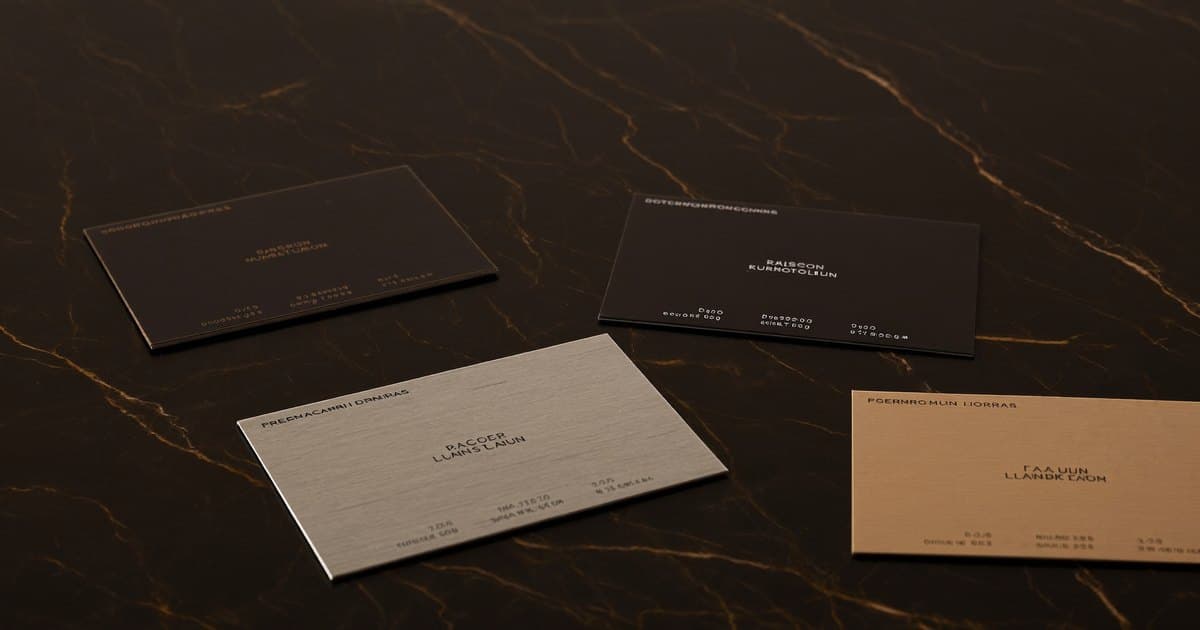
There is no single best digital business card—there is the best one for how you actually work, where your contacts live, and how much you are willing to depend on a vendor over the years you will use it. That sounds like a dodge, but it is the most useful thing anyone can tell you before you spend money. The market is full of products that look identical in a screenshot and behave very differently the day you tap one in front of a client, or the day a renewal invoice lands, or the day someone asks where their data is stored.
This is a buyer's guide written for the European professional. Not a ranked list of brands that will be out of date by next quarter, but a clear framework for separating what matters from what merely demos well. By the end you should be able to look at any digital business card—ours included—and judge it on the things that actually shape the experience: how it is shared, whether it traps you in apps or subscriptions, where it keeps data, and how it feels in the hand. If you are still deciding whether you need one at all, start with what a digital business card is and come back. This guide assumes you have decided, and now you want to choose well.
What actually makes a digital business card "good"
Strip away the marketing and a great digital business card does three jobs without friction. It shares your details instantly, it respects the person you are sharing with, and it does not quietly cost you control over time. Almost every meaningful difference between platforms maps back to one of those three.
The trap is judging on feature count. A long list of integrations and widgets looks impressive and tells you very little about the moment that matters—the two seconds when you hold a card to someone's phone and either it works smoothly or it fumbles. The criteria below are ordered the way a careful buyer should weigh them, starting with the things you cannot easily change later.
Sharing that just works: NFC plus QR, not one or the other
The whole promise of a digital business card is the tap. You hold an NFC card to a phone, the profile opens, done. When it works it feels like the future. The problem is that "when it works" hides a real-world gap, and how a platform handles that gap separates the serious products from the toys.
NFC is brilliant but not universal. Most modern phones read it, yet older devices, certain budget models, and phones with NFC switched off will not respond to a tap. If your card is NFC-only, those moments end in an awkward shrug. That is why the best cards are hybrid: NFC for the effortless tap, and a printed QR code as the fallback that any camera on any phone can read. You should never have to explain to a prospect why the technology is not cooperating.
If you want the full comparison of when each shines, we wrote it up separately in NFC vs QR code business cards. The short version for a buyer: do not accept an either/or. A card that is both NFC and QR has no dead ends. One that is only NFC is betting that everyone you meet has a cooperative phone, and that bet loses often enough to matter.
A buying rule for sharing
If a platform forces you to choose between a tap and a scan, it has optimised for a clean photo rather than a real introduction. The best digital business card carries both, so the way you share adapts to whoever is standing in front of you.
No app required—for you and for them
Here is a quiet dividing line in this market. Some platforms route everything through an app that the recipient has to install, or that you have to keep installed and logged in to manage your card. Others run entirely on the web. For a European buyer who values a frictionless first impression, this is not a small detail.
Think about the moment of exchange. You meet someone, you tap, and their phone opens your profile. If your profile is just a web page, it opens in their browser instantly—no install, no account, no permission prompts. They can save your contact and move on. If your card depends on an app, the friction lands on the person you are trying to impress, which is exactly the wrong place for it.
The same logic applies to you. A card you manage from any browser, on any device, ages gracefully. A card that lives inside a downloadable app ties your professional identity to that app's continued existence, its update cycle, and its platform support. Apps get deprecated. Web profiles do not, as long as the platform keeps the lights on. When you compare options, treat "works entirely in the browser, no app for anyone" as a feature worth paying for, not a limitation.
No subscription trap: own it, do not rent it
This is where buyers get caught, and it deserves blunt treatment. Many digital business card platforms are built around a monthly or annual fee. Your card looks free or cheap up front, then becomes a recurring line item—and the moment you stop paying, the card can stop working. Tap it, and the profile is gone or paywalled. You have, in effect, rented your own identity.
For a single subscription that is annoying. For a team it compounds fast: every employee's card is a seat, every seat renews, and the bill grows with headcount. Worse, you are now dependent on a vendor's pricing decisions for something as basic as a contact link continuing to resolve.
The cleaner model is a one-time purchase: you buy the physical card and the profile it points to, and it keeps working without a meter running. Before you commit to any platform, find the answer to one question—what happens to my card if I stop paying? If the honest answer is "it stops working," you are renting, not buying. There are perfectly good reasons a business might choose a subscription with ongoing service, but you should choose it knowingly, not discover it on the third invoice. The comparison with old-fashioned paper, where there was never a renewal at all, is worth keeping in mind; we cover that trade-off in digital vs paper business cards.
Data privacy and EU hosting: the criterion most buyers skip
A digital business card touches more personal data than the paper version ever did—yours, and increasingly the details of people you meet if you collect leads. Where that data lives is not a technical footnote in Europe. It is a compliance question, and for some buyers it is the deciding one.
Many platforms in this space are US-based, which means your data and your contacts' data can sit under US jurisdiction and depend on transatlantic transfer frameworks that have been challenged and rewritten more than once. A setup that is compliant today can be thrown into question by a court ruling you had no part in. For a freelancer that may feel abstract; for a law firm, a clinic, or a public-sector team it is precisely the exposure their compliance officers are paid to prevent.
EU hosting removes the whole category of risk. If the data never leaves the Union, there is no international transfer to justify and nothing to scramble to fix when the legal ground shifts again. When you evaluate a platform, ask where, physically, the data is stored; whether the company will sign a Data Processing Agreement; and whether it sells or repurposes the contacts you collect. Specific, unbothered answers signal a vendor that treats privacy as architecture. Vague ones tell you what you need to know. We go deep on this in GDPR and EU hosting for digital business cards—if you handle sensitive contacts, read it before you buy anything.
Premium materials: the card is still a physical object
It is easy to talk about software and forget that someone is going to hold this thing. The physical card is the part your contact actually touches, and it does quiet work for your brand in that instant. A flimsy plastic rectangle and a weighted metal card create very different impressions, and you only get one.
Materials genuinely differ. PVC is light, affordable, and perfectly respectable for most uses. Metal carries weight and a sense of occasion, which is why it suits people whose first impression is part of the job. Bamboo and other sustainable options say something about your values before you have spoken. None is objectively best—the right choice depends on the impression you want to make and the budget you have. What matters is that the platform offers real options rather than a single generic blank, and that the printing does justice to your logo and name. We compare the trade-offs, durability, and feel in NFC business card materials compared if you want to get specific before choosing.
One honest caveat worth stating: a premium material does not make a card work better technically. A €10 PVC card and a €80 metal card can point to the exact same profile and perform identically when tapped. You are paying for the impression in the hand, not the function. Buy the material that matches how you want to be remembered, and do not let anyone tell you the metal taps "better."
Analytics that inform without spying
A real advantage of going digital is that you can finally see what happens after the exchange. How many people tapped your card. Which links they clicked. Whether that conference was worth the trip. Paper told you nothing; a good digital card turns networking into something you can actually measure.
The thing to watch for is the line between useful insight and covert surveillance. Analytics that quietly fingerprint every visitor, or load tracking cookies before anyone consents, are exactly the kind of processing European privacy law cares about—and they make your own compliance harder, not easier. The best platforms give you genuinely useful signal (taps, clicks, what is working) while respecting the consent of the people who scan your card. When you assess analytics, look past the dashboard's prettiness and ask whether it is built to respect visitors by default. That tells you more about the company than any chart.
Putting it together: a buyer's checklist
You do not need to score every product on a spreadsheet. Five questions separate a card you will be glad you bought from one you will quietly resent:
- Is it hybrid? NFC for the tap, QR for the fallback—both, so there are no dead ends.
- Is it app-free? Your profile opens in any browser, and the person you meet installs nothing.
- Do you own it? A one-time purchase that keeps working, not a card that dies when a subscription lapses.
- Where does the data live? EU hosting and a clear privacy stance, not a US-centric architecture with a consent banner bolted on.
- Does the object match the impression? A material—PVC, metal, bamboo—that fits how you want to be remembered.
Answer those five honestly for any platform and the right choice for you usually becomes obvious. The flashiest feature list rarely survives this checklist; the fundamentals do.
Where VIPKART fits—honestly
We would rather earn your trust than oversell, so here is the straight version. VIPKART is built around the fundamentals above because we think they are what matter over the years you will use a card, not the week you buy it.
Every VIPKART digital business card is hybrid—NFC for the effortless tap and a QR code as the universal fallback, so the exchange never dead-ends on someone's phone. It is app-free: your profile is a fast web page, so the person you meet opens it in their browser with nothing to install, and you manage everything from any browser yourself. There is no monthly subscription—you buy the card and the profile it points to, and it keeps working without a meter running. And because we are an EU company hosting in the EU, your data and the contacts you collect stay under European jurisdiction by default, not as an upgrade.
On materials, we offer real choices—from PVC to metal to sustainable options—and we will tell you plainly that they perform identically once tapped; you are choosing the impression in the hand. The analytics give you the signal that makes networking measurable without turning into surveillance of the people who scan your card.
We are not the right answer for everyone. If you specifically want a subscription bundled with ongoing managed services, another model may suit you better. But if your priorities are the ones this guide argues for—hybrid sharing, no app, no rental, EU privacy, and a card that feels like you—then we built VIPKART for exactly that buyer.
Frequently asked questions
What is the best digital business card in Europe?
There is no single winner, but for European professionals the strongest options share the same fundamentals: hybrid NFC plus QR so sharing never fails, no app required for you or the people you meet, a one-time purchase rather than a subscription, EU hosting for privacy, and a physical card whose material matches the impression you want to make. Judge any product against those, not against feature count.
Do I need an app to use a digital business card?
You should not, and the better platforms do not require one. The ideal setup is a web-based profile that opens instantly in any browser when tapped or scanned—nothing for the recipient to install, and nothing tying your professional identity to an app's update cycle. Treat "app-free for everyone" as a feature, not a limitation.
Are digital business cards a subscription?
Some are, and that is the main trap to watch for. With subscription platforms your card can stop working the moment you stop paying. Others—including VIPKART—use a one-time purchase, so you own the card and its profile outright. Before buying, always ask what happens to the card if you cancel.
Does NFC or QR work better?
Neither is strictly better; they cover different gaps. NFC gives the effortless tap on most modern phones, while a QR code works on virtually any camera, including older or NFC-disabled devices. The best digital business cards include both, so you are never left explaining why the tap did not work. See NFC vs QR code business cards for the full breakdown.
Why does EU hosting matter for a digital business card?
Because the card touches real personal data—yours and your contacts'—and where that data is stored is a compliance question in Europe, not a technical one. EU hosting keeps data under European jurisdiction and removes reliance on transatlantic transfer frameworks that have repeatedly been challenged. For anyone handling sensitive contacts, it is the materially safer choice.
Choose the fundamentals, not the screenshot
The best digital business card is the one that still works the way you expected three years from now: it taps and scans without fail, it asks nothing of the people you meet, it does not hold your identity hostage to a renewal, and it keeps your data somewhere you are comfortable defending. Everything else is decoration on top of that foundation—pleasant, but not what you will remember.
If those fundamentals are your priorities, take a closer look at the VIPKART digital business card, and read how we handle data security and EU hosting before you commit to anyone. Buy for the years, not the screenshot—and you will choose well.
Ready to make a card people keep?
Tap to share, save in seconds, and update your details for life.
Explore VIPKART