



NFC Business Card Materials: PVC vs Metal vs Wood vs Bamboo
Choosing an NFC metal business card or a PVC, wood, or bamboo one? A material-by-material guide to look, feel, durability, NFC performance, price, and sustainability—mapped to real VIPKART models.
By VIPKART · Published June 20, 2026 · 10 min read
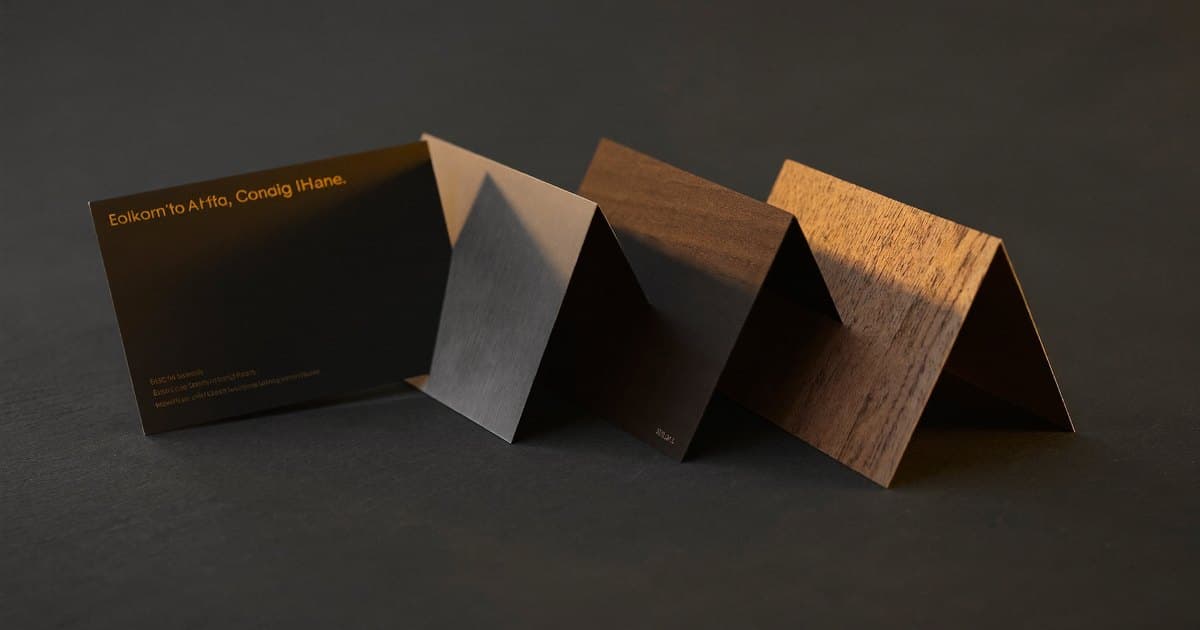
The chip inside every NFC business card is essentially the same. What changes everything is the material wrapped around it—the thing the other person holds, turns over, and judges in the half-second before they tap. That material decides how the card feels in the hand, how long it survives a wallet, how the chip performs, and what it quietly says about you.
This guide walks through the four materials that matter for an NFC card: PVC, metal, wood, and bamboo. We will look at each one honestly—where it shines, where it compromises—and map them to the cards we actually sell, so you can pick the one that fits how you network and what you want it to say.
First, what the material does and does not change
Before comparing surfaces, it helps to separate what is constant from what varies.
The NFC chip is constant. Whether your card is plastic or steel, the embedded chip holds the same thing: a single web link pointing to your online profile. Tap a phone against it and your profile opens. Nothing sensitive lives on the card itself, so the material has no bearing on what data you share or how you update it later. If you are new to how this works, our explainer on what an NFC business card is covers the mechanics end to end.
What the material does change comes down to four things people underestimate:
- Feel and first impression — weight, finish, edge, and the sound it makes on a table.
- Durability — how it ages in a wallet, a pocket, or a year of daily taps.
- NFC read performance — whether the material interferes with the radio signal.
- Sustainability — what it is made of and what happens to it at end of life.
The "best" material genuinely depends on which of those four you weight most.
PVC: the dependable everyday card
PVC is the material most people picture when they think of a plastic card—the same family as a bank card or hotel key card. It is the workhorse of the NFC card world, and that is not an insult.
Look and feel
PVC cards are light, flexible, and smooth. They feel familiar precisely because they share a form factor with the cards already in everyone's wallet. A matte or soft-touch PVC finish reads as clean and modern; a glossy one feels more like a loyalty card. At VIPKART our white and black PVC cards lean into that premium-matte direction rather than the shiny end of the spectrum.
The trade-off is presence. A PVC card does not announce itself with weight. When you hand it over, the moment lives in the tap and the profile that opens—not in the object itself. For a lot of professionals, that is exactly right.
Durability
Good PVC is more rugged than it looks. It shrugs off water, flexes without snapping, and resists everyday scuffing. Over years of heavy use the surface can show wear and the printed graphics can fade slightly, but for most people a PVC card comfortably outlasts the stack of paper cards it replaces several times over.
NFC performance
This is where PVC quietly wins. Because it is a plastic, it is radio-transparent—it does not interfere with the NFC signal at all. Reads are fast, consistent, and reliable from either side of the card. No engineering tricks required.
Price and sustainability
PVC is the most affordable option, which is why our white and black models sit at the accessible end of the range. On sustainability it is the most complicated: PVC is a petroleum-derived plastic and not casually recyclable. The honest framing is that one durable PVC card you keep for years still beats reprinting paper cards every season—but if environmental impact is your deciding factor, the wood and bamboo options below tell a better story. We lay out the full picture on our sustainability page and in our guide to eco-friendly business cards.
Best for: professionals who want a clean, reliable, well-priced card and care most about the digital experience rather than the object.
Metal: the card that lands with weight
A metal NFC card is the one people remember holding. There is a reason a heavy card feels more "valuable"—our hands genuinely associate density with quality, and a metal card leans hard into that instinct.
Look and feel
This is the flagship feel. A metal card has real heft, a cool touch, a crisp edge, and a faint, satisfying sound when it meets a table. Brushed, matte, or laser-etched finishes catch light in a way plastic cannot. When you place one in someone's hand, the object itself does part of the work before they have even tapped it. For founders, executives, luxury and hospitality brands, and anyone whose first impression carries real commercial weight, that presence is the entire point.
Durability
Metal is the most durable material here, full stop. It does not flex, fade, or wear the way plastic and wood eventually can. A metal card you buy today will look the same in five years. It is the closest thing to a permanent business card.
NFC performance—the important caveat
Here is the engineering reality that cheap metal cards get wrong: metal blocks NFC signals. A solid metal card with a chip naively embedded inside will read poorly or not at all, because the metal shields the antenna.
A well-made metal NFC card solves this deliberately—typically with a non-metallic window or insert around the antenna, or hybrid construction that gives the chip a clear path to the phone's reader while keeping the metal look and weight. This precision is a real part of why metal cards cost more. The takeaway for a buyer: metal NFC cards absolutely work, but the construction matters, so buy from someone who has engineered around the physics rather than ignored it.
Price and sustainability
Metal sits at the top of the range. It is a premium product and priced like one—the materials are more expensive, the manufacturing is more involved, and the antenna engineering adds cost. On sustainability, metal is durable enough that it is unlikely to be replaced, and many metals are recyclable, but it is energy-intensive to produce. It is a "buy once, keep forever" choice rather than a low-footprint one.
A note on the VIPKART range: our metal models are positioned as premium and rotate in and out of availability. If a metal finish is not purchasable at the moment, that is intentional—we would rather pause a line than ship a metal card whose NFC read is anything less than instant.
Best for: anyone for whom the handover is a high-stakes moment—senior roles, luxury brands, and people who want the object itself to signal status.
Wood: warm, distinctive, and naturally sustainable
A wooden NFC card is the one that breaks the pattern. In a stack of plastic and steel, wood is unexpected, tactile, and warm—and it photographs beautifully, which matters more than people admit in a world of LinkedIn posts and unboxing shots.
Look and feel
No two wood cards are identical, because the grain is natural. That subtle variation is the charm: the card feels handmade and organic rather than mass-produced. It is light but substantial, smooth with a hint of texture, and the engraved or printed detailing on wood has a craft quality that plastic cannot mimic. Our wood model is built around exactly this character—understated, natural, and memorable for being different.
Durability
Wood is durable in normal use but the most demanding of the four. It does not love prolonged moisture, and the surface can mark over time the way good wood furniture does—some people consider that patina part of the appeal. Kept in a wallet or a card case, a wood NFC card holds up well for years. It simply asks for a little more care than metal or PVC.
NFC performance
Like PVC, wood is radio-transparent. It does not interfere with the NFC signal, so reads are fast and reliable with no special engineering. You get the distinctive material without the metal card's antenna complications.
Price and sustainability
Wood typically sits between PVC and metal on price, and it is the strongest everyday sustainability story in the lineup. It is a renewable material with a far lower footprint than petroleum-based plastic, especially when responsibly sourced. If you want a card that both looks intentional and aligns with environmental values, wood is the sweet spot.
Best for: designers, creatives, sustainability-minded brands, and anyone who wants their card to feel warm and distinctive rather than corporate.
Bamboo: the lightweight eco champion
Bamboo is wood's faster-growing cousin, and for a card it earns its own category. Technically a grass, bamboo regenerates remarkably quickly without replanting, which gives it the lowest environmental footprint of any material here.
Look and feel
Bamboo is light, pale, and clean, with a fine, even grain that looks more uniform than hardwood. It feels precise and modern—less rustic than wood, more "engineered natural." It carries the same eco signal as wood but with a lighter, brighter aesthetic.
Durability and NFC performance
Like wood, bamboo is best kept away from prolonged moisture, and like wood it is fully radio-transparent, so NFC reads are clean and reliable. In practical terms it behaves much like a wood card with a different visual personality.
Price and sustainability
This is bamboo's headline: it is the most sustainable choice in the range by a clear margin, thanks to how fast it grows and renews. On price it sits in the premium tier alongside the standout finishes.
As with metal, bamboo at VIPKART is a premium line that may be temporarily unavailable. When it is offered, it is the pick for buyers who put sustainability first without compromising on a card that still feels considered and high-end.
Best for: the most environmentally driven buyers who want the lowest footprint and a clean, modern look.
Side-by-side: which material wins on what
No single material wins everything—that is the whole point of offering a range. Here is the honest scorecard.
- Best feel and status: Metal. Nothing matches the weight and the moment of handover.
- Best value and reliability: PVC (white/black). Affordable, rugged enough, flawless NFC.
- Best everyday sustainability with character: Wood. Renewable, distinctive, warm.
- Lowest environmental footprint: Bamboo. The fastest-renewing material, premium feel.
- Best NFC read with zero caveats: PVC, wood, and bamboo all read cleanly. Metal reads beautifully too, but only when properly engineered.
- Most durable: Metal, with PVC a close second for everyday resilience.
If you are still weighing whether a tappable card even suits you versus a scan-based approach, our comparison of NFC vs QR code business cards is a useful companion read—the good news is that a quality card supports both, so the material choice is about the object, not the technology.
How to choose your material in three questions
You can shortcut the whole decision by answering three things honestly.
1. What does the handover need to do? If your introductions are high-stakes—closing deals, representing a luxury brand, meeting investors—the presence of metal earns its premium. If your card's job is mainly to get a clean tap and a saved contact, PVC does that for less.
2. How much does sustainability weigh for you? If it is a genuine deciding factor and part of your brand, go wood or bamboo. Both look intentional and tell a credible environmental story that plastic cannot.
3. What is your budget per card—and at what volume? Buying one statement card for yourself is a different calculation than equipping a team. For multi-person rollouts, PVC keeps per-card cost sensible while staying sharp; see our guide to digital business cards for teams for how that plays out at scale.
Whatever you choose, remember the part that does not change: the digital profile behind the card is identical across every material. You can switch the object you hand out without ever touching the profile people already saved.
Frequently asked questions
Does an NFC metal business card work as well as a plastic one?
Yes—when it is built correctly. Metal blocks radio signals, so a metal NFC card needs deliberate construction, usually a non-metallic window or insert around the antenna, to let the chip communicate with a phone. A properly engineered metal card reads just as instantly as a PVC one. The risk is only with cheaply made metal cards that ignore the physics, which is why construction quality matters more here than with any other material.
Which NFC card material is the most durable?
Metal, comfortably. It does not flex, fade, or wear, and a metal card will look the same years from now. PVC is the most durable of the everyday materials—water-resistant and flexible—while wood and bamboo are durable in normal use but prefer to be kept out of prolonged moisture.
Are wood and bamboo NFC cards better for NFC reading than metal?
In one narrow sense, yes: wood and bamboo are radio-transparent, so they never interfere with the signal and need no special engineering to read reliably. Metal can match that performance but only through deliberate design. If you want guaranteed, no-caveat NFC behavior, PVC, wood, and bamboo are the simplest bets.
Which material is the most environmentally friendly?
Bamboo, because it regenerates faster than almost any other natural material without replanting. Wood is a close and excellent second. PVC is a petroleum-based plastic and the least eco-friendly, though a single durable card still beats repeatedly reprinting paper. Our eco-friendly business cards guide goes deeper on the comparison.
Why are metal and bamboo cards sometimes unavailable?
At VIPKART, metal and bamboo are premium lines that rotate in and out of availability. We would rather pause a line than ship a card that does not meet our standard—particularly metal, where a poor read would undermine the whole point. Our white, black, and wood models are the consistently available core of the range.
Does the card material affect the data I share or how I update it?
No. The material only changes the physical object. Every card holds the same simple web link to your online profile, and you update that profile through your dashboard—so changing your phone number, title, or links works identically whether your card is PVC, metal, wood, or bamboo.
Pick the card that fits the moment
The chip does the clever part. The material does the human part—the weight, the warmth, the impression that lingers after the tap. PVC keeps it clean and dependable, metal makes the handover an event, wood adds warmth and character, and bamboo leads on sustainability without giving up a premium feel.
When you are ready, explore the full VIPKART digital business card range and choose the material that matches how you want to be remembered—then let the same profile follow you across every card you ever hand out.
Ready to make a card people keep?
Tap to share, save in seconds, and update your details for life.
Explore VIPKART