



Reusable Business Cards: The Sustainable Choice
How one reusable business card—NFC plus QR—replaces stacks of printed paper. A practical look at lifecycle, real cost, bamboo and wood options, and who this approach actually suits.
By VIPKART · Published June 20, 2026 · 8 min read
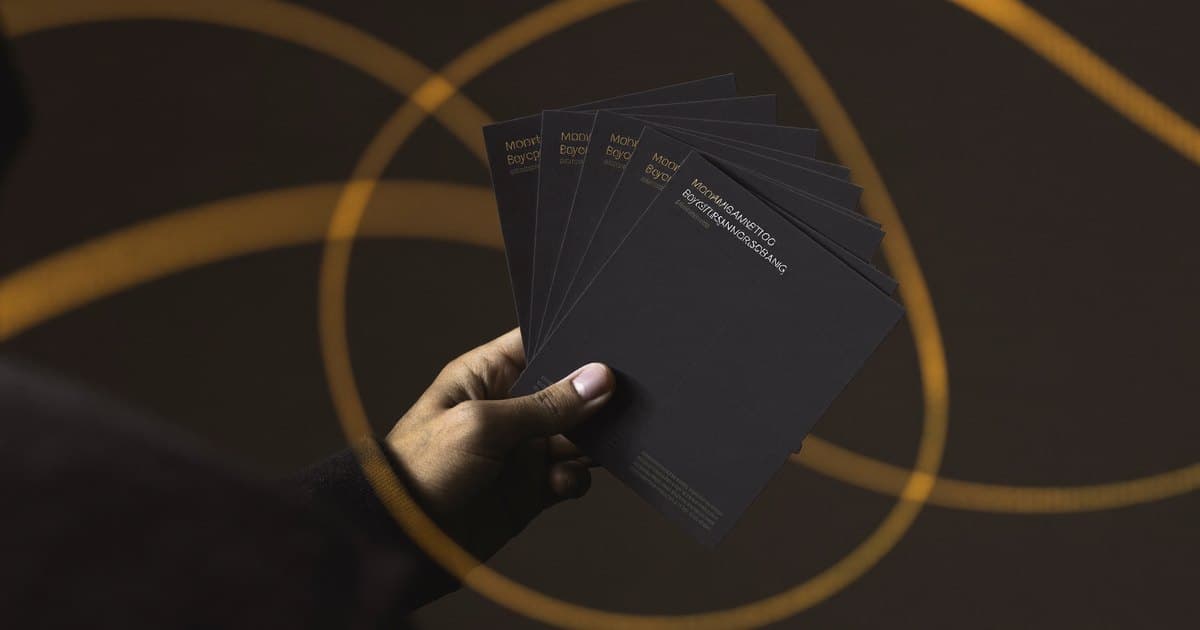
Open the drawer of almost any working professional and you'll find the same thing: a small graveyard of business cards. Cards from a job two roles ago. Cards with an old phone number scratched out and a new one biroed in. A half-empty box of 250 that became obsolete the week you got a new title. The paper business card is the rare object we buy in bulk, knowing in advance that most of it will be thrown away.
A reusable business card flips that logic. Instead of producing a fresh disposable object for every person you meet, you carry one durable card—with an NFC chip and a QR code—and use it again and again, for years, with thousands of people. Nothing changes hands except your details, which land directly on the other person's phone. There's nothing to reprint when your number changes, nothing for the recipient to lose, and nothing destined for that drawer.
This guide explains how reusable cards actually work, what their lifecycle and cost look like compared with paper, where bamboo and wood fit in, and—honestly—who they suit and who they don't.
What "reusable" actually means here
It's worth being precise, because "reusable business card" can sound like a gimmick—a card you hand over and ask for back. That's not it.
A reusable card stays with you. It carries two ways to share your details:
- An NFC chip embedded in the card. The other person taps their phone against it and your profile opens—no app required on either side, since modern phones read NFC natively. If you're new to the technology, our explainer on what an NFC business card is covers the basics.
- A printed QR code, usually on the back, for phones that aren't positioned for a tap or for moments when you're sharing across a table. The trade-offs between the two methods are laid out in our guide to NFC vs QR code business cards.
Both lead to the same place: a hosted profile page with your name, role, contact details, links, and a one-tap "save to contacts" button. The recipient keeps the information, not the card. You walk away still holding the only physical object involved.
That single distinction—the card comes home with you—is what makes it reusable, and it's the entire basis of the sustainability case. A paper card is consumed once per contact. A reusable card is consumed never. The same object that introduces you to someone on Monday introduces you to someone else on Friday and, with no changes, is still working two years later.
The lifecycle, side by side
Sustainability claims live or die on lifecycle, so let's trace both kinds of card from creation to end-of-life rather than comparing a vague "feel."
The paper card's lifecycle is short and linear. Pulp is made (water, energy, fibre), stock is coated or laminated for that premium finish, a batch is printed, the batch is distributed, and the overwhelming majority is binned—often within days. Then the cycle repeats. You change a phone number, take a new role, refresh your branding, and the previous box becomes waste regardless of how many cards are left in it. The footprint isn't one print run; it's print run after print run across a career, plus the laminates and gloss coatings that make many of those cards non-recyclable and non-compostable. We dig into the numbers behind this in our piece on the environmental impact of paper business cards.
The reusable card's lifecycle front-loads its footprint and then amortises it. One object is manufactured and shipped—that's a real cost, and pretending otherwise would be its own kind of greenwashing. But from that point forward, the per-contact impact collapses toward zero. There's no second print run, because there's no first one in the disposable sense. Sharing your details a thousand times consumes nothing physical. Updating your details consumes nothing physical. When you eventually stop using the card, it's a single item rather than the cumulative waste of every box you'd otherwise have printed.
The honest framing is this: the question was never "which single card is greener?" A reusable card and a paper card, considered one-to-one, aren't wildly different objects. The question is "which approach produces the least waste across everything you'll do?" Once you count reprints, role changes, and the cards thrown away unused, the reusable approach wins by a wide margin for anyone who networks more than rarely. For a fuller cost-and-impact breakdown, our comparison of digital vs paper business cards runs the trade-offs in detail.
The cost case (it's not just an eco case)
Sustainability and cost usually pull in opposite directions. Reusable cards are one of the few places they line up.
A paper card is cheap per unit and expensive per career. The "500 cards for €15" deal looks unbeatable until you count how often you reorder. New job: reprint. New phone number: reprint. Rebrand: reprint. A typo you only spot after delivery: reprint. Each reorder carries setup, design tweaks, and shipping on top of the unit price, and each one orphans whatever's left of the previous batch. The cards are cheap precisely because the model assumes you'll keep buying them.
A reusable card inverts the spend. You pay once for a durable object, then your details live on an editable profile. Change jobs and you edit a field—no reorder, no shipping, no waiting. The card you bought before the change still works after it. Over a few years, the total cost of one reusable card plus free edits typically sits well below the cumulative cost of repeated paper print runs, and you avoid the dead time between "details changed" and "new cards arrived" when you're handing out something already wrong.
One caveat worth flagging, because it's a common trap: some digital card products lock your profile behind a perpetual subscription, so the moment you stop paying, your details go offline. That quietly reintroduces the recurring cost the reusable model is supposed to remove. The sustainability and cost logic only fully holds when keeping your own profile online doesn't carry a forced monthly fee.
Bamboo and wood: reusable and renewable
If reusability is about how often a card is used, material is about what it's made of—and the two combine best in bamboo and wood NFC cards.
A conventional NFC card is often PVC: plastic, durable, but petroleum-derived and landfill-bound at end of life. Bamboo and wood cards keep the reusability while swapping the material for something renewable:
- Bamboo is technically a grass, and a fast-growing one—it regenerates in a handful of years rather than the decades hardwoods take. It's strong, light, and takes engraving and print cleanly.
- Wood veneers offer a warmer, premium grain that ages gracefully. Each card looks slightly different, which many people find more memorable than a uniform plastic rectangle.
The reason this pairing is compelling is that it removes the usual either/or. You're not choosing between "physical but wasteful" and "sustainable but intangible." A bamboo or wood NFC card is physical and premium and made from a renewable material and—because nothing is consumed per contact—structurally low-waste. The renewable material is genuinely a bonus layered on top of the bigger win, which is reusability itself. If you want to compare the surfaces in detail, our guide to NFC business card materials walks through bamboo, wood, metal, and PVC. You can also see how VIPKART thinks about material sourcing and lifecycle on the sustainability page.
A small honest note: a bamboo card still has a footprint—it was harvested, finished, and shipped. The point isn't that it's free of impact; it's that one renewable, reusable object replaces hundreds of disposable printed ones, and that's where the saving lives.
Who reusable business cards actually suit
No single tool fits everyone, and the value of a reusable card scales directly with how much you network and how often your details change.
They suit you well if:
- You network regularly. Conferences, sales calls, events, meetups—the more hands your card would otherwise reach, the more reprints you avoid and the stronger the case.
- Your details change. New roles, promotions, number changes, rebrands. Anyone whose paper cards keep going stale gets the biggest benefit, because editing a profile beats reordering every time.
- You work in a field where presentation matters. A bamboo or metal card with a clean tap is a small, memorable moment. Property, hospitality, consulting, creative work, and founders tend to feel this most—our piece on digital cards for real estate is one such example.
- You care about the waste story and want it to be real rather than a recycled-paper logo on a card that still gets binned.
- You run a team. Standardising on reusable cards removes the recurring reprint cost across everyone at once; our guide to digital business cards for teams covers the rollout side.
They suit you less if:
- You almost never hand out a card. If you share details twice a year, the gap between a reusable card and a paper one is small, and a fully virtual business card—shared by link with no physical object at all—may be all you need.
- You operate where NFC and QR aren't reliably understood. This is increasingly rare, but in some contexts a familiar paper card still does social work a tap can't. Even then, a reusable card with a clear QR fallback usually bridges the gap.
The deciding factors are volume and change. Low volume, never-changing details: the difference is marginal. Regular networking, evolving details: the reusable approach is both the greener and the more practical choice.
Frequently asked questions
What is a reusable business card?
It's a single durable card you keep and use repeatedly, rather than a disposable one you hand over. It carries an NFC chip and a QR code that open a hosted profile with your contact details, so the person you meet saves your information to their phone and you keep the card. Because nothing is consumed per contact, the same card works for thousands of introductions over years—no reprinting when your details change.
Are reusable cards really better for the environment than recycled paper?
Generally, yes—if you network more than occasionally. Recycled paper lowers the impact per card, but it doesn't change the fact that each card is printed and usually discarded. A reusable card removes the disposability itself: one object replaces every box you'd otherwise print and reprint over a career. The reusable card has a manufacturing footprint, but it's amortised across thousands of uses rather than spent fresh on each contact.
Do I need an app to use a reusable NFC card?
No. Modern smartphones read NFC natively, so the person you tap doesn't install anything, and neither do you—your details live on a web profile that opens in a browser. The QR code is there as a fallback for any phone that isn't positioned for a tap. This is one of the main practical advantages of the format over older digital-card systems.
Are bamboo and wood cards as durable as plastic ones?
Yes, in normal everyday use. Bamboo and wood NFC cards are sealed and finished to handle pockets, wallets, and daily handling, and the NFC chip is protected inside the card just as it is in a PVC version. They're built to be carried for years—which is the whole point of a reusable card. The difference is the material is renewable and ages with character rather than staying a uniform plastic rectangle.
What happens to a reusable card when my job or number changes?
Nothing happens to the card—you edit your profile instead. The card encodes a stable link to your hosted page, so when you update your title, number, or company, the card keeps working and simply shows the new details on the next tap. That's the core saving: no reorder, no shipping wait, and no box of suddenly-wrong cards to throw away.
Is a reusable card worth it if I rarely hand out business cards?
If you share details only a couple of times a year, the environmental and cost gap between a reusable card and paper is small, so it's less essential. In that case a fully virtual, link-shared card may cover you. The reusable format earns its value when you network regularly or your details change often—that's when the avoided reprints and waste add up.
One card instead of a stack
The greenest, cheapest, most practical card isn't a better disposable—it's the one you stop throwing away. A reusable business card replaces the print-discard-reprint cycle with a single durable object that shares details you can update for years, and in bamboo or wood, it does so in a renewable material that still feels premium in the hand.
If that's the version of "sustainable" you actually want—physical, lasting, and genuinely low-waste—see how VIPKART approaches it on our sustainability page, and browse the digital business card range to find the one that fits how you network.
Ready to make a card people keep?
Tap to share, save in seconds, and update your details for life.
Explore VIPKART